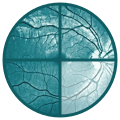
What is AMD?
The macula is the central part of the retina, which you use for reading, recognising faces and seeing fine detail. AMD damages this area. It usually first affects people in their 50s or older. It doesn't cause total blindness, because it doesn't affect the edges of your vision, but it can make everyday tasks difficult.
There are two main forms. Dry AMD develops gradually over years. Wet AMD happens when abnormal blood vessels grow under the macula, and it can affect vision much more quickly.
Symptoms
- A blurred or distorted area in the centre of your vision
- Straight lines looking wavy or crooked
- Difficulty reading, driving or recognising faces
- Sensitivity to bright light
AMD isn't painful, and it doesn't change how your eyes look. It's sometimes found at a routine eye test before you notice any symptoms.
Treatment
Treatment depends on which form you have. Wet AMD is usually treated with anti-VEGF injections into the eye, and early treatment gives the best chance of protecting your sight. There's currently no established treatment that reverses dry AMD, but monitoring, lifestyle advice and low vision support can all help.
Smoking, high blood pressure, being overweight and a family history of AMD have all been linked with the condition, so Mrs Mann may also discuss these with you.
Your consultation
Mrs Mann sees private patients at The London Medical Clinic in Marylebone, central London. A first consultation usually includes a discussion of your symptoms and medical history, a vision check, drops to widen your pupils, and an examination of the back of your eye. You may also have a retinal scan. The drops can blur your vision for a few hours, so please don't plan to drive afterwards.
Common questions
Will AMD make me blind?
AMD doesn't usually cause total blindness, because it affects central vision rather than the edges of your vision. It can still have a big effect on reading, driving and recognising faces.
Is wet AMD an emergency?
Wet AMD should be assessed urgently, as it can affect vision quickly. If your vision suddenly gets worse or straight lines start to look wavy, seek help the same day.
Can I have a private consultation without a referral?
Please call Kirsty on 020 7050 0725, who can explain what's needed. If you're using health insurance, your insurer may ask for a GP referral.
Sudden change in your vision? Please don't wait for an appointment. Contact NHS 111 or go to your nearest A&E or urgent eye service.